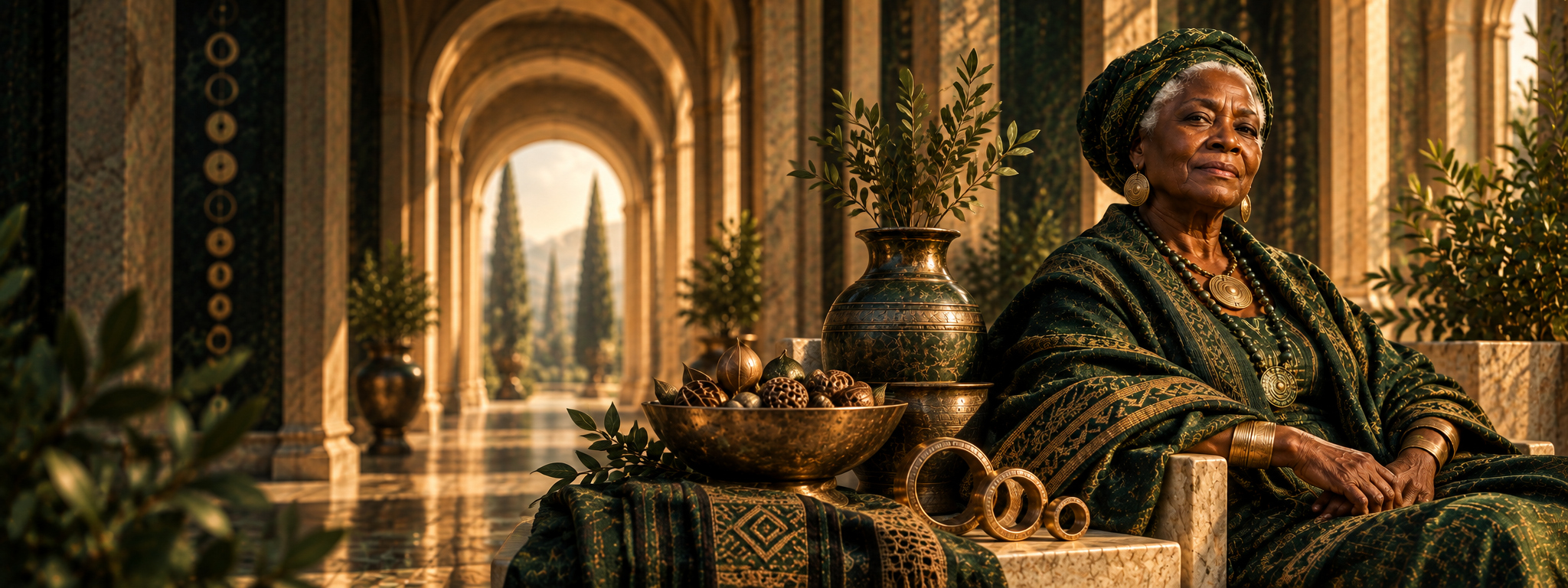
There are forms of knowledge that can be acquired quickly.
A fact can be learned in minutes.
A technique can sometimes be taught in hours.
Information can cross the world almost instantly.
But some knowledge has a condition that speed cannot satisfy.
It requires duration.
You must have seen something begin, develop and end. You must have watched choices become consequences. You must have lived long enough to discover that some things that once appeared permanent were only seasons.
You must have encountered return.
This is one of the possibilities of elderhood.
The elder has had more opportunities to see time complete its sentences.
What does a woman carry
when decades of living become memory?
01 · The Human Archive
Before memory was stored in machines, much of it had to remain inside people.
Human communities have always needed ways to carry knowledge across generations.
Some knowledge could be preserved materially—in objects, inscriptions, manuscripts, tools, architecture and later printed records.
But enormous amounts of human knowledge have also travelled through people.
Stories were remembered.
Genealogies were remembered.
Skills were demonstrated.
Birth practices, food preparation, child care, cultivation, healing traditions, songs, warnings, social expectations and family histories could be transmitted from one generation to another through repeated human contact.
In many communities, older women participated in such transmission.
The exact authority and responsibilities of elder women have varied enormously across cultures and historical periods, so there is no single universal institution called “the elder woman.”
But wherever experience is carried through people, longevity creates the possibility of becoming an archive.
Diagram 01 · When Lived Time Becomes Inheritance
Experience can move beyond the person who first lived it.
02 · The Knowledge That Requires Return
Pattern recognition needs more than one encounter.
One drought is an event.
Several droughts remembered across years may begin to reveal a pattern.
One family conflict can feel unprecedented.
Someone who has watched several generations may recognize a familiar dynamic beneath different names and circumstances.
One season of failure may feel like the end of a life.
Someone who has survived several endings may know that an ending and the end are not always the same thing.
This is not mystical foresight.
It is one of the ordinary possibilities created by accumulated experience.
The person who has seen recurrence may recognize structure where the first-time observer sees only crisis.
The younger person may know what is happening now.
The elder may remember what happened the last time something like this came.
03 · The Grandmother as Bridge
One human life can touch several generations at once.
A grandmother may have known people her grandchildren will never meet.
She may remember houses that no longer stand, roads before they were roads, family relationships before the youngest members were born, words no longer commonly spoken, recipes no longer written down, migrations, marriages, births, disputes, reconciliations and deaths.
She can therefore occupy an unusual position in time.
Her memory reaches backward into people and events that may otherwise disappear, while her speech reaches forward into lives that may continue after her own.
This does not make every remembered account historically exact. Human memory is selective and can change over time.
Oral testimony should therefore be treated critically when it is used as historical evidence.
But critical examination is not the same as dismissal.
The elder can be a bridge precisely because she has occupied more than one generational world.
Diagram 02 · Three Generations, One Bridge
Before
Those Who Came Before
People, places, events and practices remembered by the elder.
Living Bridge
The Elder Woman
Memory is held, interpreted, selected and transmitted.
After
Those Who Come After
A new generation receives what it did not personally witness.
Transmission preserves continuity, but what is transmitted should still be examined, interpreted and, where possible, compared with other evidence.
04 · Menopause Is Not the End of Female Time
A woman does not cease to be a timekeeper when menstruation ends.
Earlier Journals in this collection have considered menstruation because it makes recurring bodily time unusually visible.
But womanhood cannot be reduced to menstruation.
Menopause marks a major reproductive transition, not the end of a woman's relationship with biological, social or generational time.
Circadian rhythms remain.
Ageing continues.
Memory continues.
Relationships change.
Families expand, contract and reorganize.
The body enters different conditions, while the woman may simultaneously accumulate decades of lived knowledge.
The end of one rhythm can reveal another dimension of time.
05 · Age Does Not Automatically Become Wisdom
Years provide experience. What we do with experience matters.
It would be easy to romanticize elderhood.
But growing older does not automatically make a person wise, accurate, generous or emotionally mature.
A person can repeat an experience without reflecting on it.
Pain can become compassion, but it can also become bitterness.
Tradition can preserve valuable knowledge, but it can also preserve practices that deserve examination or change.
Memory can illuminate, and memory can distort.
Elderhood therefore provides material for wisdom.
Wisdom requires something further: reflection, humility, discernment and the willingness to learn even after one has become the person others come to for answers.
Diagram 03 · Experience Is Not Yet Wisdom
Experience
What happened to me and around me.
Reflection
What did I understand from what happened?
Discernment
What pattern, limit or principle can I responsibly recognize?
Wisdom
How should what I learned shape action, counsel and transmission?
06 · When Generations Stop Speaking
A society can possess information and still lose memory.
Modern societies can store extraordinary quantities of information.
Yet stored information is not identical to intergenerational relationship.
A database can preserve a date.
It cannot replace the human context of someone saying, “I was there.”
A search engine can retrieve instructions.
It cannot automatically tell a young woman which parts of an inherited practice were protective, which were circumstantial and which should no longer be carried forward.
That requires conversation, evidence, judgment and sometimes disagreement.
When generations stop speaking, what is lost is not simply old information.
We lose the opportunity to place the present inside a longer human story.
07 · The Elder Must Also Listen Forward
Transmission is not the same as demanding repetition.
The purpose of memory is not to force the future to reproduce the past.
The younger generation lives in conditions the elder may never have encountered.
Technologies change.
Economies change.
Language changes.
Family structures and expectations change.
New knowledge can expose errors in inherited explanations.
Therefore the elder who only speaks backward can become as limited as the young person who refuses to listen backward.
Mature transmission carries memory into the future without demanding that the future become a copy of the past.
Intergenerational Exchange
Both directions carry something necessary.
Elder → Younger
Memory
Context
Long-view consequence
Stories of survival and failure
Practices worth examining
Warnings against repeated mistakes
Younger → Elder
New conditions
New questions
New knowledge
Challenges to inherited assumptions
Emerging forms of expression
The future memory must learn to serve
08 · Becoming the Ancestor You Once Needed
Elderhood is not only something that happens to us.
Every generation eventually becomes someone's earlier generation.
The young woman who is asking questions today may one day be the person from whom another woman asks:
What happened?
What did you learn?
What should we remember?
What should we refuse to repeat?
What did your generation misunderstand?
What did you almost lose?
What did you restore?
What must we carry farther than you could?
Seen this way, elderhood does not begin at a particular birthday.
We begin preparing for it whenever we decide whether our experiences will become only memories—or examined wisdom that can nourish someone who comes after us.
Formation Insight
The elder woman is not valuable because she belongs to the past.
She becomes valuable to the future when lived time has been transformed into something worth transmitting.
Her gift is not age alone.
It is the possibility of remembering beginnings after seeing endings, recognizing recurrence after surviving change and offering another generation a longer horizon than its own lifetime.
Keeper of Time Practice
Begin recovering the women's archive around you.
Choose an older woman in your family or community whose life intersects with a history you want to understand. Rather than asking only for advice, ask for memory.
Where appropriate and with her permission, record the conversation. Preserve her words while remembering that oral testimony is a source to be understood and, for historical claims, compared with other available evidence.
Carry This With You
What will remain because you remembered?
Which elder women in your family or community still carry memories you have never asked them to tell?
What knowledge disappeared when an older woman died?
Which traditions deserve preservation?
Which inherited practices deserve examination rather than repetition?
What have your own years already taught you that a younger person may one day need?
Are you preserving only events—or also what those events taught you?
She has seen seasons arrive.
She has watched some of them pass.
She remembers what returned.
She remembers what did not.
And when memory has been examined, humbled and transformed into wisdom, the elder woman can give the future something no clock can provide:
the memory of time already lived.
Evidence · Tradition · Interpretation
Historical & Cultural
Older women have held important roles in knowledge transmission, family life and community practice in many societies. Those roles vary by culture, period, status and social structure and should be studied specifically rather than universalized.
Human Memory
Lived experience can preserve information unavailable to later generations, while memory itself remains selective and fallible. Oral testimony is valuable evidence but should not automatically be treated as exact historical record.
Formation Insight
“Keeper of Time” is our interpretive language for the person whose accumulated experience becomes memory, pattern recognition, discernment and responsible transmission.
Continue the Collection
When the Body
Says It Is Time
What happens when the body has entered a new season, but the mind, schedule and expectations are still demanding the old one?
Next Journal →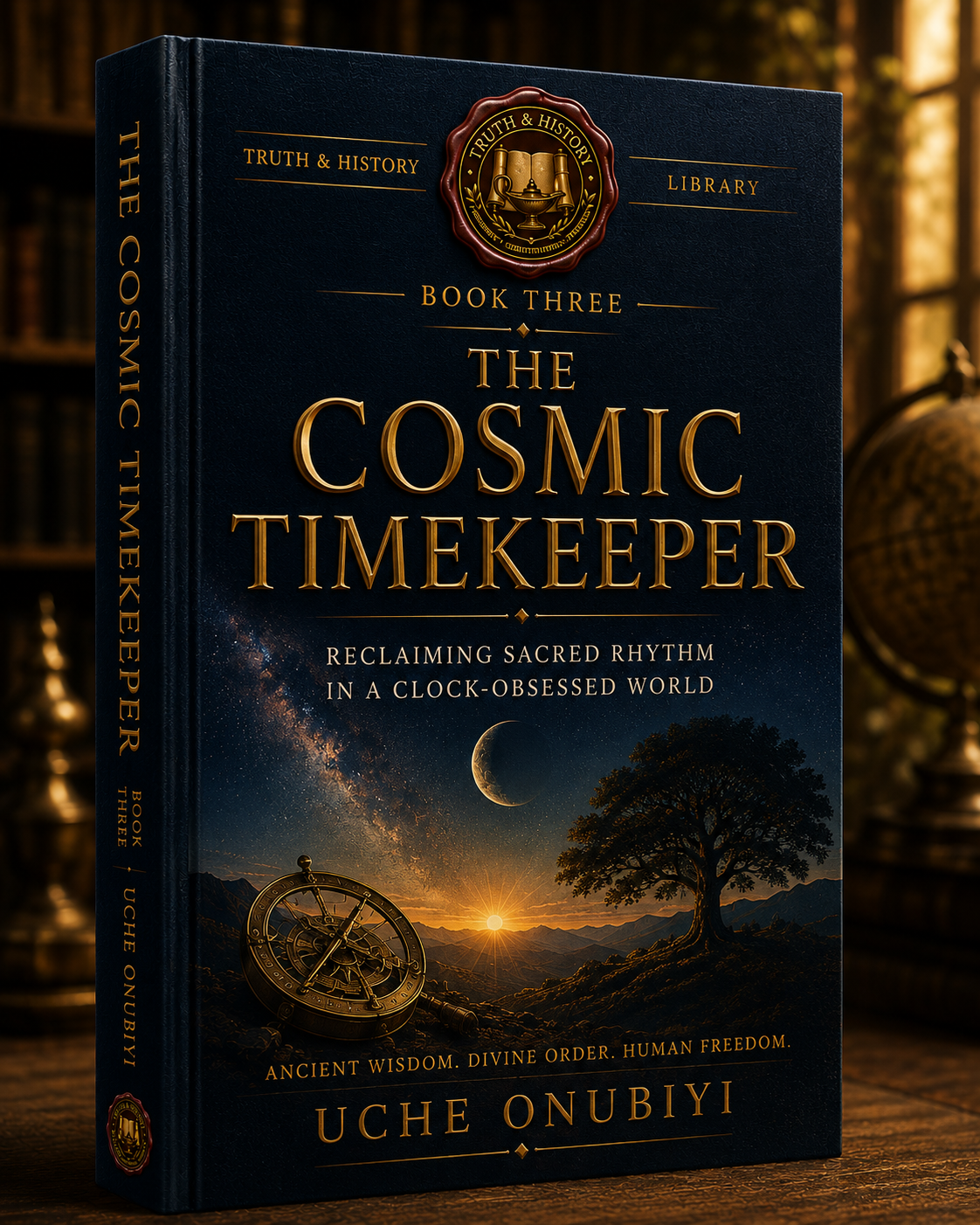
Read More
The Cosmic Timekeeper
Explore the wider relationship between natural time, human memory, biological rhythm, changing seasons and the knowledge that becomes visible only through recurrence.
Read the Book →